










When relationships feel painful, confusing, or stuck, it’s rarely because you haven’t “tried hard enough.”
Most people put a lot of effort into their relationships. They read articles, listen to podcasts, reflect on their behavior, and genuinely want to do better. And yet, the same patterns still show up.
That’s usually the moment people start wondering:
“Do I need a relationship coach… or do I need a therapist?”
This question often comes with uncertainty, and sometimes even self-doubt. You might worry about choosing the “wrong” kind of help, or wonder what your struggle says about you.
So before we go any further, it’s important to say this clearly:
Needing support does not mean you’re broken. Wanting help does not mean you’ve failed. And seeking clarity is already a healthy step forward.
Both relationship coaching and therapy can be deeply supportive. They simply exist to meet different needs, in different ways. Understanding the difference isn’t about labeling yourself. It’s about finding the kind of support that feels steady, safe, and useful for where you are right now.
What Relationship Coaches Do
Relationship coaching focuses on how you relate, to others and to yourself, and how those patterns can shift over time through awareness, learning, and practice.
Many people who seek relationship coaching are functioning well in daily life. They work, maintain friendships, and manage responsibilities. From the outside, things may look “fine.” But internally, relationships often feel heavy, confusing, or emotionally draining.
A relationship coach helps you slow down and look at those patterns with curiosity rather than judgment.
The Core Focus of Relationship Coaching
At its heart, relationship coaching is about education and skill-building. A coach helps you understand:
- why certain reactions keep happening
- what emotional needs are driving behavior
- how to respond in new ways that feel safer and more grounded
This work is forward-focused. While the past may be discussed for context, coaching emphasizes what you can practice now to create different outcomes.
Relationship coaches commonly support areas such as:
- communication
- boundaries
- emotional responses
- attachment dynamics
- relationship habits
What Relationship Coaching Typically Helps With
A relationship coach may help you:
- Understand your attachment style and how it affects closeness and conflict
- Notice repeating patterns in dating or long-term relationships
- Learn how to communicate needs clearly and calmly
- Practice expressing boundaries without guilt, fear, or shutdown
- Reduce emotional reactivity over time
- Build consistency between what you feel and how you act
- Develop healthier relationship habits through repetition
This work is considered healing because it helps change patterns that once protected you, even if they now limit connection.
What “Healing” Means in Relationship Coaching
In coaching, healing does not mean diagnosing or treating mental health conditions. Instead, healing refers to:
- healing emotional habits
- healing attachment responses
- healing subconscious beliefs about love, safety, and worth
- healing how you relate under stress
It’s about learning new ways of responding that feel more aligned and supportive.
Nothing about coaching assumes something is “wrong” with you. The focus is on growth, not correction.

What Therapists Do
Therapy serves a different, and critically important, role.
A therapist is a licensed mental health professional trained to provide clinical care. Therapy is designed to support people who need diagnosis, treatment, or help navigating emotional pain that feels overwhelming or destabilizing.
While coaching focuses on skills and patterns, therapy focuses on mental health and emotional safety.
When Therapy Is Especially Important
Therapy is often the right support when someone is experiencing:
- ongoing anxiety or depression
- trauma that feels intrusive or consuming
- emotional instability or frequent shutdown
- thoughts of self-harm or harm to others
- symptoms that interfere with sleep, work, or daily life
- the need for diagnosis and structured treatment
In these situations, learning communication tools alone is not enough. What’s needed is stabilization, care, and treatment.
What Therapy Typically Involves
Therapists are trained to:
- assess mental health conditions
- provide trauma treatment and processing
- offer crisis intervention
- create treatment plans
- coordinate care with other healthcare providers when needed.
Therapy often works at a deeper emotional level, helping people feel safe enough to process painful experiences and regulate intense emotional responses.
This type of care can be life-changing, and in many cases, essential.
The Differences Between the Two
Because both coaching and therapy are supportive, it’s easy to blur the lines between them. But the difference isn’t subtle. It’s foundational.
At a high level:
Therapy treats mental health conditions.
Relationship coaching teaches emotional and relationship skills.
Differences in Purpose
- Therapy exists to provide clinical care and treatment
- Coaching exists to provide education, tools, and practice
Differences in Focus
- Therapy focuses on mental health, trauma, and emotional stability
- Coaching focuses on patterns, behaviors, and relational skills
Differences in Scope
Relationship coaching does not:
- diagnose mental health conditions
- treat mental illness
- provide trauma treatment
- or offer crisis or emergency support
Therapy does.
Neither approach is better than the other. They simply support different types of needs, and sometimes at different stages of a person’s journey.
When You Might Need a Coach vs. a Therapist
If you’re still unsure which option fits you best, it can help to gently check in with your current experience, without judgment.
You Might Benefit From a Relationship Coach If…
- You feel emotionally capable, but stuck in patterns
- You understand your issues intellectually but want practical change
- You want tools you can apply in daily interactions
- You’re ready to practice new behaviors consistently
- You want relationships to feel calmer and more secure
- You’re focused on growth, clarity, and skill-building
Many people choose coaching when they say things like:
“I know what I’m doing. I just don’t know how to stop.”
You Might Benefit From Therapy If…
- Emotions feel overwhelming or unmanageable
- Trauma feels close to the surface or intrusive
- You feel emotionally unsafe with yourself or others
- Mental health symptoms affect daily functioning
- You need diagnosis, treatment, or crisis support
In these cases, therapy isn’t a failure. It’s appropriate care. And choosing therapy now doesn’t mean you’ll never benefit from coaching later.
Integrated Attachment Theory™: The New Way
Many people discover attachment styles and feel a sense of relief. Finally, there’s language for why relationships feel the way they do.
But understanding your attachment style doesn’t automatically change it.
Integrated Attachment Theory™ builds on traditional attachment theory by focusing not just on why patterns exist, but how they change, in a non-clinical, educational way.
What Makes This Approach Different
This framework looks at:
- core emotional wounds that shape attachment
- unmet needs that drive behavior
- emotional regulation skills
- boundaries and communication
- how repetition and practice rewire patterns over time.
Rather than treating attachment styles as fixed, this approach emphasizes earned security: the idea that people can build more secure ways of relating through conscious practice.
How Healing Is Defined Here
Healing within this framework means:
- reducing automatic reactions
- building awareness of emotional triggers
- meeting needs more directly
- practicing new relational behaviors consistently
This is not therapy. There is no diagnosis, trauma treatment, or clinical care involved.
For many people, this approach feels like the missing bridge between insight and real-life change.
Working with Both: What You Need to Look For
Some people benefit from working with both a therapist and a relationship coach, especially when each role is clear and respected.
In these cases:
- Therapy supports emotional safety, mental health, and clinical healing
- Coaching supports skill-building, practice, and day-to-day relationship growth.
What to Look for If You Hire Both
If you’re considering both supports, it’s important to look for professionals who:
- respect each other’s scope of practice
- encourage appropriate referrals when needed
- don’t compete for authority
- and keep your well-being at the center
The goal isn’t to “do more work.” It’s to get the right kind of support in the right areas.
Choosing What’s Right For You
If you’re unsure what kind of help you need, that doesn’t mean you’re lost. It means you’re listening to your relationships, your emotions, and your needs.
Relationship coaching focuses on healing patterns, building skills, and practicing new ways of relating. Therapy focuses on clinical care, emotional stabilization, and treatment when it’s needed.
Both exist because relationships matter. Both exist because people deserve support that fits their experience.
You’re allowed to choose what feels right now, later, or differently as you grow.
And taking the time to understand your options? That, too, is part of healing.
Share this Article

Let's stay connected!
Get personal development tips, recommendations, and exciting news every week.
Become a Member
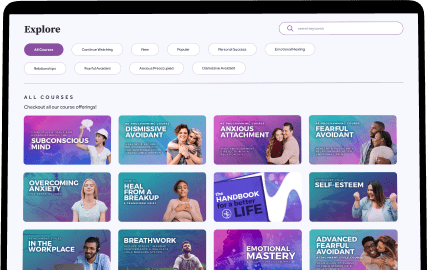
An All-Access Pass gives you even more savings as well as all the relationship and emotional support you need for life.
Top Articles
12 JUN 2025
Attachment Wounds: 6 Types, Their Effects & How to Heal
Struggling with trust or fear of abandonment? Learn the 6 types of attachment wounds, how they affect relationships, and steps you can take to heal.
27 OCT 2023
Best Strategies for Intimacy & Sex with Dismissive Avoidants
Learn about dismissive avoidants, sex and how you can bring your relationship closer together in this extensive guide.
13 JUN 2024
Can Avoidants Fall in Love? Signs Your Avoidant Partner Loves You
Are you dating an avoidant but don’t if they love you? Here are the clear-cut signs that an avoidant loves you.